A recession resistant franchise sells a service people still need when money is tight, to many small customers, in a category a downturn shifts rather than switches off. Moving and junk removal fit that description: in good years people move up, and in lean years they downsize, settle estates and clear space. No franchise is immune to a downturn, so the real question is which demand drivers survive one.
What does “recession resistant” actually mean for a franchise?
Recession resistant means demand softens in a downturn instead of disappearing. A franchise earns that label on three tests: the service is needs-based rather than discretionary, the customer base is broad enough that no single account can sink a month, and the work cannot be deferred for long or replaced by software.
The label is not a promise. Every business feels a contraction somewhere, including in the price customers will pay and how quickly they pay it. What a resilient category gives an owner is a floor under demand while the economy sorts itself out. At College Hunks Hauling Junk®, we have franchised since 2007, so our owners have run this model through the 2007 to 2009 recession and the 2020 contraction. Many of the people asking this question are mid-career managers deciding what comes after a layoff, and our career change at 50 guide lays those options out side by side.
How long do recessions actually last?
Recent U.S. recessions have lasted between two and eighteen months, according to the National Bureau of Economic Research, which officially dates the business cycle. That range matters more than any single statistic, because it tells you how much working capital a business needs to carry through a soft stretch.
| Recession | Peak | Trough | Length |
|---|---|---|---|
| 2001 recession | March 2001 | November 2001 | 8 months |
| Great Recession | December 2007 | June 2009 | 18 months |
| 2020 pandemic recession | February 2020 | April 2020 | 2 months |
The practical lesson for a buyer: the Item 7 estimate in any Franchise Disclosure Document includes an “additional funds” line that typically covers the first three months. Treat that as the floor, not the plan. An owner who walks in with a cushion sized for a long contraction is the owner who gets to the other side. The full investment breakdown for a College Hunks territory lays out those line items.
Why do moving and junk removal hold up when the economy slows?
Moving and junk removal hold up because the triggers behind the work are life events, not spending moods. People move for a new job, a divorce, a new baby, a death in the family or a downsizing, and each of those produces a move and a pile of things that need to go somewhere. Expansion and contraction change the mix of jobs far more than the volume.
The data backs that up. According to the Census Bureau’s American Community Survey, 11.8 percent of Americans moved to a different residence in 2024, down slightly from 12.1 percent in 2023. That is roughly one in eight people, every year, in a stretch nobody would call a housing boom. The mover rate drifts, but it does not collapse, because moving is not something most households get to put off.
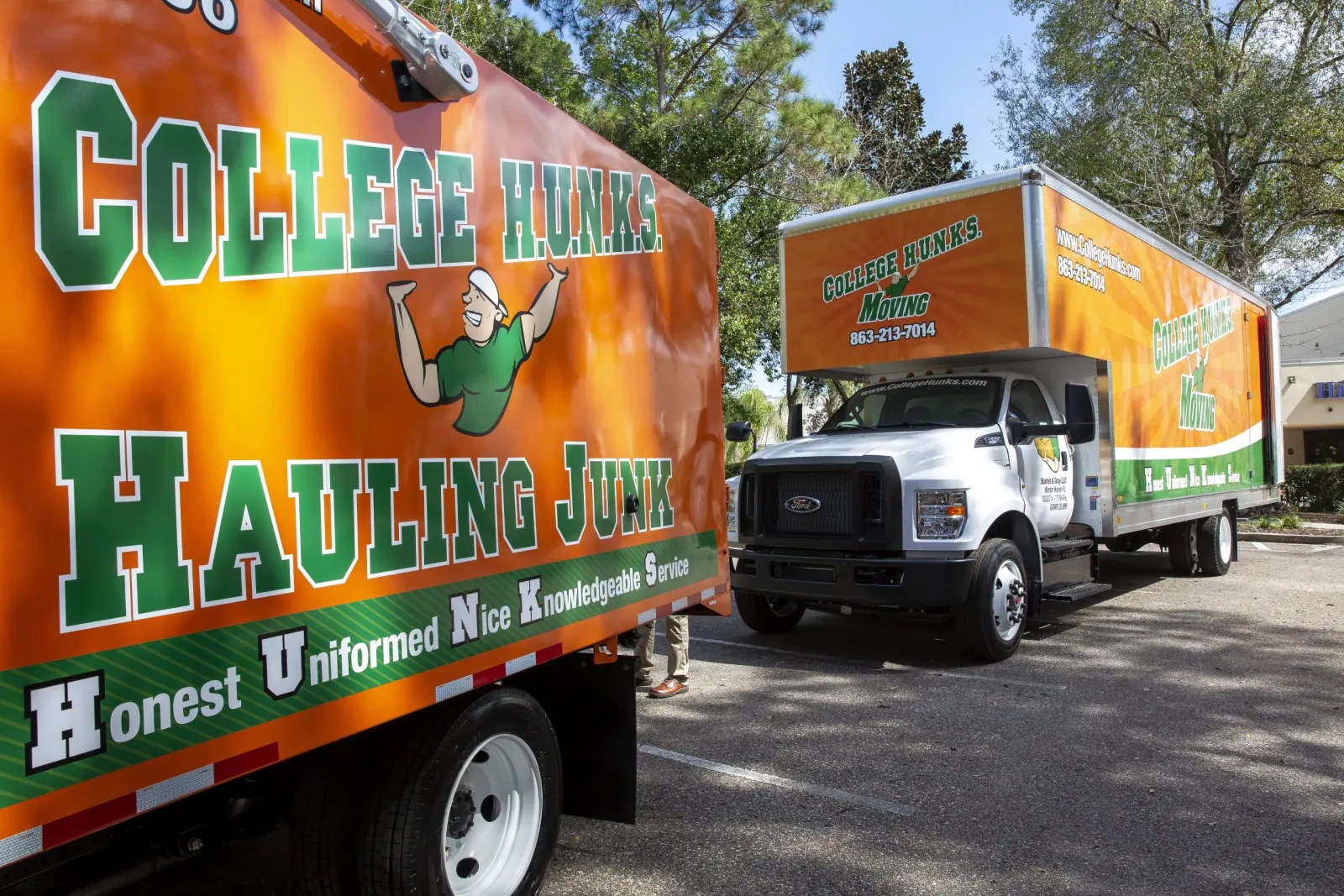
Junk removal has a similar shape. In an expansion the work is renovations, upgrades and move-in cleanouts. In a contraction it is estate cleanouts, downsizing, storage-unit clearances and landlords turning over units faster. Our framing for this is simple: demand cycles both ways. When people move up, they call us. When they tighten up, they call us too.
The clearest case study on our blog is Scott Leffel, who left a corporate sales job and bought the Dallas territory at 50, during COVID, after watching the category keep working through the hardest stretch of the pandemic. His story is this test applied in real time.
How do you test whether a franchise is really recession resistant?
Test the claim the way a lender would, with documents rather than adjectives. The FDD gives you most of what you need, and validation calls with current owners give you the rest.
- Read Item 20 across a full cycle. It lists outlets opened, closed, transferred and terminated over three years. Look at how the system behaved through a soft period, not only the growth years.
- Count the customers behind a typical month. A business built on a handful of commercial contracts can lose half its demand in one phone call. Hundreds of households cannot all cancel at once.
- Look for more than one service line. Two concepts in one territory give an owner two demand curves. When moving slows, estate and downsizing cleanouts often pick up the slack.
- Ask where the jobs come from. A franchise that depends entirely on the owner’s own advertising is only as resilient as the owner’s budget. Ask what the franchisor’s booking infrastructure does and what it costs.
- Size working capital for eighteen months, not three. Use the NBER table above and build the reserve into your financing before you sign.
- Check the franchisor’s own tenure. A system that has franchised through at least one recession has a track record you can verify. A brand founded in 2021 has a thesis.
| What to check | Where to find it |
|---|---|
| Openings, closings and transfers over time | FDD Item 20 and the outlet list exhibit |
| Customer concentration | Validation calls with current owners |
| Service lines and the fee for each | FDD Items 1 and 5 |
| Booking infrastructure and what it costs | FDD Items 1, 6 and 11 |
| Working capital assumptions | FDD Item 7, the “additional funds” line |
| Franchisor tenure through past cycles | FDD Items 1 and 20, checked against NBER dates |
For the broader version of this checklist, franchise due diligence walks through what to verify before any purchase, and the ongoing costs of operating a franchise covers the fees that keep running whether or not the phone rings.
How does the College HUNKS model fit this test?
College Hunks Hauling Junk® and College Hunks Moving® run as two concepts in one territory, on one technology stack, which is the structural answer to the single-service problem. An owner is not betting the business on the housing market alone. Each concept carries its own franchise fee and its own truck, and the two service lines serve the same customer in different seasons of their life.
Demand does not start with the owner’s advertising budget. The National Sales & Loyalty Center takes orders, schedules appointments and routes jobs to owners by zip code (FDD Item 1), so owners lead teams instead of answering phones. Owners take on real obligations too, including a local advertising commitment and Sales & Loyalty Center appointment fees. Both are set out in Items 6 and 11 of the FDD, and the franchise development team walks through each one on a call.
Two coaches, a Marketing Coach and a Franchise Business Coach, work with every owner, which matters most when conditions change and an owner wants a second set of eyes on pricing, routing and crew size. The system ended 2025 with 159 franchised outlets (2026 FDD Item 20), so the model has been run through the Great Recession and the 2020 contraction by real owners, not projected through them on a spreadsheet. How the franchise model works covers the two-in-one structure in detail.
If that structure matches what you were already looking for, start the conversation with our franchise development team and get the Items 6, 7 and 20 detail in one call.
Is a cheaper franchise safer in a recession?
No. A low entry cost tells you what you pay on day one and nothing about whether customers keep calling in month fourteen of a downturn. Some of the lowest-cost franchises sell the most discretionary services. Judge the price of entry against the demand behind it, and read how the franchise fee relates to the full Item 7 investment before you compare brands on sticker price.
What can a College HUNKS owner expect financially?
The honest answer lives in Item 19 of our FDD, which reports results by location tenure with the assumptions that have to travel with the numbers. We publish that picture, with the required context, on what franchisees actually earn, and the franchise development team walks through it line by line on a call.
Where does this leave you?
Recession resistance is a set of demand drivers you can verify, not a badge a brand awards itself. If you’re weighing whether a College Hunks Hauling Junk® franchise fits your goals, talk to our Franchise Development team and see if your market is still open. We read every inquiry and there’s no pressure, just answers.
This information is not an offer to sell or solicitation to buy a franchise. A franchise offering can only be made through the delivery of a Franchise Disclosure Document. Certain states regulate the offer and sale of franchises; if you are a resident of one of these states, we will not offer you a franchise unless we have complied with applicable pre-sale registration and disclosure requirements in your state.
Financial information shared in this content is drawn from Item 19 of the 2026 CHHJ Franchising, L.L.C. Franchise Disclosure Document (Issuance Date: April 30, 2026, as amended August 26, 2026). See Item 19 for material assumptions, the underlying data set, and full required disclosures. Past performance does not guarantee future results. New franchisees may earn less.
College Hunks Hauling Junk®, College Hunks Moving®, and the H.U.N.K.S logo are registered trademarks of CHHJ Franchising, L.L.C. © 2026 CHHJ Franchising, L.L.C. All rights reserved.

Twenty minutes with our team.
The model, the live territory map, and the unit economics for your market. No script, no pressure.
Qualifying veterans and first responders receive a discount on the initial franchise fee.
Could this be your story?
Book a call with the franchise development team. They’ll walk you through the model, the live territory map, and the unit economics for your market.
More from the newsroom.
Hand-picked from the same category. All stories →
-
How to Become a Franchise Owner in 9 Steps (2026)
How to become a franchise owner in 9 steps: qualify, fund, pick a brand, study the FDD, check owners, sign, train and open.
-
Initial Franchise Fee: What It Covers and Costs
The initial franchise fee typically runs $20,000 to $50,000. See what it covers, what it doesn’t, and how College HUNKS fees compare in the FDD.
-
What Is a Conversion Franchise? (2026 Guide)
What is a conversion franchise? How conversion franchising works, its pros and cons, and how junk and moving operators convert to College HUNKS.