The equipment needed for a junk removal business falls into five groups: a hauling vehicle, loading and lifting gear, hand tools and demolition gear, safety equipment, and the software that books and dispatches the work. The vehicle is the single decision that sets your capacity ceiling, and it takes most of the money. Everything else is comparatively cheap and gets added as your job mix tells you what you are missing.
What equipment does a junk removal business need?
A junk removal business needs six categories of equipment before it can run its first paid job safely and legally. The list below is the working version, ordered by how soon you need each group rather than by what it costs.
| Category | What it covers | When you need it |
|---|---|---|
| Hauling vehicle | Dump-body truck, box truck, or a pickup paired with a dump trailer | Before the first job |
| Loading and lifting | Hand truck, appliance dolly, ramps, straps, moving blankets, rope, furniture sliders | Before the first job |
| Hand and demolition tools | Sledgehammer, pry bar, reciprocating saw, bolt cutters, cordless drill, shovels, brooms | Before the first job |
| Safety and PPE | Cut-resistant gloves, steel-toe boots, eye protection, dust masks, first aid kit, fire extinguisher | Before the first job |
| Software and office | Booking and dispatch software, payment processing, phone number, digital invoices | Week one |
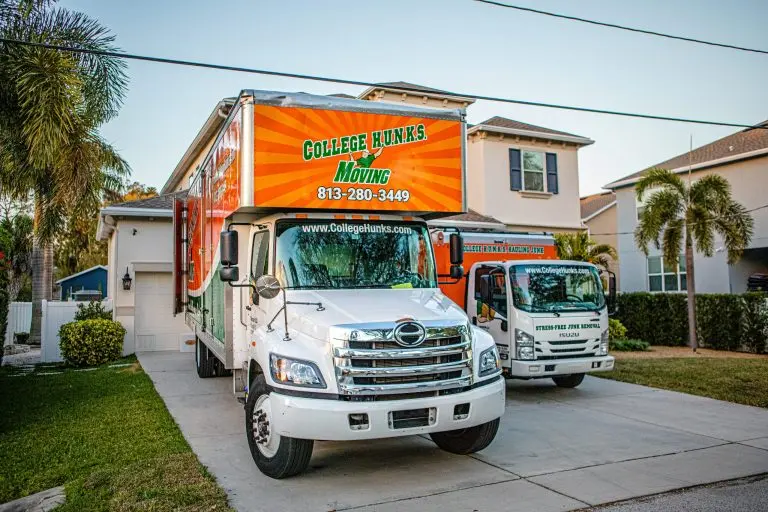
| Branding | Truck wrap or lettering, uniforms, yard signs | As soon as the truck is in service |
Notice what is not on the list. No yard, no warehouse, no forklift, no second crew. Those come later, and only when the work demands them. Buying ahead of the work ties up capital that should be paying for advertising instead.
Truck, dump trailer, or box truck: which hauling setup fits?
Most junk removal operators start with one of four hauling setups, and the right one depends on whether you plan to run junk only or junk plus moving work. Capacity matters less than load and unload speed, because turn time decides how many jobs a truck completes in a day.
| Setup | Loading | Unloading | Best fit |
|---|---|---|---|
| Pickup with a dump trailer | Over the rail or up a ramp | Hydraulic dump | Lowest entry point, mixed residential loads |
| Dump-body truck | Low bed wall and a ramp | Hydraulic dump | The category standard for junk-only work |
| Box truck | Ramp or liftgate | Hand unload at the transfer station | Operators who also run moving jobs |
| Roll-off or hooklift | Container sits on site | Container gets swapped | Construction debris and standing-container work |
One practical note before you shop. Most junk trucks are spec’d under a 26,001 pound gross vehicle weight rating so a standard driver’s license covers them, which keeps your hiring pool wide. Confirm the rating and any commercial registration rules with your own state first, because vehicle classification and business registration travel together. Our guide to the licenses a junk removal business needs covers that paperwork.
What loading and lifting gear belongs on every truck?
Lifting gear is the cheapest equipment on the list and the quickest to pay for itself, because it turns a two-person struggle into a one-person carry. Keep a duplicate set on every truck rather than shuttling one kit between vehicles.
- A convertible hand truck and a separate appliance dolly with a stair climber
- Ratchet straps and forearm forklift straps for awkward pieces
- Moving blankets, which protect the customer’s walls more than they protect the load
- Aluminum ramps rated well above the heaviest single item you expect to move
- Furniture sliders, a pallet jack if you take commercial work, and rope
- Tarps and bungees, since an uncovered load is a citation waiting to happen
What hand tools and demolition gear do you need on site?
Junk removal turns into light demolition more often than new owners expect, and a crew that can break down a swing set or a hot tub in the driveway loads far faster than one carrying it out whole. Keep a demolition kit in a job box on the truck.
- Sledgehammer, pry bar, and a claw hammer
- Cordless reciprocating saw with wood and metal blades, plus spare batteries
- Cordless drill and an impact driver for disassembly
- Bolt cutters, tin snips, and a utility knife
- Shovels, rakes, push brooms, and a dustpan for the cleanup that closes the job
- Contractor bags, a job box, and a portable work light
Sweeping the space after the load is out is not a tool, but it is the habit that earns the review, and reviews fill next week’s schedule.
What safety gear is not optional?
Safety equipment is the one category where the cheap version costs more than the good one. Crews handle broken glass, nails, mystery liquids, and refrigerators full of spoiled food, and a single injury takes a truck out of service for weeks.
- Cut-resistant gloves for every crew member, replaced when they wear through
- Steel-toe or composite-toe boots
- Safety glasses and N95 dust masks for demolition and attic work
- High-visibility vests for curbside and commercial jobs
- A stocked first aid kit and a fire extinguisher on every truck
Your insurer will ask about this. Coverage terms and what happens when a crew damages a customer’s property both move with how you equip and train the team, as our breakdown of insurance for a junk removal business explains.
What software does a junk removal business run on?
Software is equipment. The booking and dispatch system decides how many calls turn into scheduled jobs, and a missed call is a lost job in a category where customers usually phone three companies at once. At minimum: online booking, a dispatch and routing view, mobile payment processing, and automated review requests.
Two things make the decision harder than it looks. Quoting sight-unseen needs a price structure your team applies the same way every time, which is the job of a junk removal pricing sheet. And booking software only helps once the phone rings, so it has to sit alongside a real plan for generating junk removal demand.
In what order should you buy junk removal equipment?
Buy in this order: hauling vehicle, safety gear, lifting gear, demolition tools, branding, then a second truck. The sequence matters because each stage should be funded by the work the previous stage produced, not by capital you needed for advertising.
The second truck is the decision owners get wrong most often. Add it when you are turning work away regularly, not when the first truck feels busy, and staff it before you buy it. A truck without a crew is just a payment. Put this ordering in writing: the equipment and operations section of a junk removal business plan is where a lender looks for it, and our guide to how to start a junk removal business covers the path around it.
What does the equipment line look like inside a franchise?
Inside a College Hunks Hauling Junk® franchise the equipment spend appears as named line items in Item 7 of the 2026 Franchise Disclosure Document, so a candidate sees the range before signing instead of discovering it truck by truck. Below is the vehicle and equipment portion of that estimate.
| 2026 FDD Item 7 line item | Low | High |
|---|---|---|
| Down payment on service vehicle | $3,000 | $35,000 |
| Paint and signage for the service vehicle | $5,500 | $10,000 |
| Equipment and hand tools | $2,000 | $12,000 |
| Office equipment and supplies | $2,000 | $7,500 |
Those line items sit inside a total estimated initial investment of $193,100 to $345,500 for both concepts in a single zone, which also covers training, insurance deposits, pre-opening advertising, and three months of working capital. The full picture sits on the page covering the full investment breakdown.
Item 7 also spells out what “Equipment and Hand Tools” buys, which independent operators usually assemble piece by piece: hand tools, GPS navigation, inward and outward facing vehicle cameras, a credit card processor, cleaning tools, and uniforms.
The structural difference is what the equipment points at. College Hunks Moving® runs on the same technology, dispatch, and back office as the junk side, so one territory supports two revenue lines instead of one (each concept fields its own truck and equipment package). That is the core of how the two-in-one model works. Independents who add moving later usually buy a second, different vehicle for it.
Should you buy the equipment list or step into a system?
Buying your own equipment gives you total control, no fee, and a truck spec’d exactly how you want it. That is a real path and plenty of good operators take it. The trade is that you also own every decision behind the equipment: which truck, which software, what to charge, and where the calls come from.
A franchise moves those decisions off your desk. The National Sales and Loyalty Center books and dispatches thousands of jobs a week so owners lead crews instead of answering phones, every owner works with a dedicated Marketing Coach and Franchise Business Coach, and roughly $30 million in annual national media keeps the brand in front of customers before your truck pulls up. That is what the training and support owners get is built to replace.
If you are weighing whether a College Hunks Hauling Junk® franchise fits your goals, talk to our Franchise Development team and see if your market is still open. We read every inquiry and there is no pressure, just answers.
Disclosures
Financial information shared in this content is drawn from Item 19 of the 2026 CHHJ Franchising, L.L.C. Franchise Disclosure Document (Issuance Date: April 30, 2026, as amended August 26, 2026). See Item 19 for material assumptions, the underlying data set, and full required disclosures. Past performance does not guarantee future results. New franchisees may earn less.
This information is not an offer to sell or solicitation to buy a franchise. A franchise offering can only be made through the delivery of a Franchise Disclosure Document. Certain states regulate the offer and sale of franchises; if you are a resident of one of these states, we will not offer you a franchise unless we have complied with applicable pre-sale registration and disclosure requirements in your state.
College Hunks Hauling Junk®, College Hunks Moving®, and the H.U.N.K.S logo are registered trademarks of CHHJ Franchising, L.L.C. © 2026 CHHJ Franchising, L.L.C. All rights reserved.

Twenty minutes with our team.
The model, the live territory map, and the unit economics for your market. No script, no pressure.
Qualifying veterans and first responders receive a discount on the initial franchise fee.
Could this be your story?
Book a call with the franchise development team. They’ll walk you through the model, the live territory map, and the unit economics for your market.
More from the newsroom.
Hand-picked from the same category. All stories →
-
Insurance for a Junk Removal Business: What to Carry
Insurance for a junk removal business: the four coverages to carry before your first paid job, the exclusions that surprise haulers, and what a franchise changes.
-
Junk Removal Marketing Strategies That Keep a Truck Full
The junk removal marketing strategies that actually fill a schedule: local search, paid channels, route density, commercial accounts, and what a franchise replaces.
-
They Left Corporate America for a College HUNKS Franchise
Todd and Anne Smith left 25-year corporate careers, trained virtually during COVID, and built an award-winning College HUNKS franchise in Asheville, NC.