If you are looking at how to start a junk removal business, the honest answer is that it comes down to five moves: register and insure the company, secure a truck and basic hauling equipment, set your pricing and service area, line up disposal that includes donation and recycling, then win your first jobs with local marketing. You can build it independently from the ground up, or shorten the climb by buying into an established brand that already sends demand your way. Here is an honest look at both paths, including what each one asks of you in time and money.
What Does It Take to Start a Junk Removal Business?
The independent path is simple on paper. You need a registered business, the right insurance, a reliable truck, a couple of dependable crew members, and a plan for where the hauled items go. None of it is complicated on its own. The real work is doing all of it well at the same time, while you also chase down the customers who keep the truck moving.
Here are the core building blocks most new owners set up first.
| Step | What it involves |
|---|---|
| Register and insure | Form an LLC, pull a local business license, and carry general liability plus commercial auto coverage. |
| Truck and equipment | A box truck or dump trailer, dollies, straps, hand tools, and heavy-duty disposal bags. |
| Pricing and service area | Volume-based pricing and a service radius you can cover profitably without burning the day in traffic. |
| Disposal plan | Standing relationships with landfills, recyclers, and donation centers so items leave responsibly. |
| Getting customers | A Google Business Profile, real reviews, local ads, and a booking process that answers fast. |
How Much Does It Cost, and Is a Junk Removal Business Profitable?
An independent startup can begin with one truck and a small crew, and your largest early costs are the vehicle, insurance, and ongoing disposal fees. A franchise path costs more up front, and in exchange it replaces guesswork with a proven system. For reference, the total investment to open a College Hunks Hauling Junk® franchise (junk and moving combined, one zone) runs from $193,100 to $345,500, which includes the $65,000 franchise fee and roughly three months of working capital. You can see the full investment breakdown for how those line items add up.
Profitability depends on volume, pricing, and how consistently the trucks stay booked. Across all College Hunks franchised locations reporting in the 2026 Franchise Disclosure Document, average gross revenue was $1,554,610 (144 locations, Item 19). That figure reflects established locations running two revenue lines, not a first-year independent still building a name. It is a useful ceiling to understand what a mature, well-run operation can look like.
For a fuller look at where the margin in this business actually comes from, and what quietly eats it, see whether a junk removal business is profitable and what separates the operations that do well.
Should You Start Independent or Buy a Franchise?
Both routes produce successful owners. The right one depends on how much you value speed and support versus full independence, and buying a franchise vs starting a business weighs that trade across upfront cost, speed to revenue, control, and exit. The independent route gives you total control and a lower entry cost, and you learn every part of the business by doing it. A franchise gives you a brand, a booking engine, and a playbook on day one, so you spend your energy leading a team instead of inventing the system.
| Factor | Independent startup | College Hunks franchise |
|---|---|---|
| Brand and trust | Built from zero, one review at a time | National brand with about $30M a year in media exposure |
| Getting booked | You find and schedule every job | A National Sales & Loyalty Center books and dispatches jobs |
| Revenue lines | Usually junk removal only | Junk removal and moving under one brand and one fee |
| Support | You figure it out as you go | A dedicated Marketing Coach and Franchise Business Coach |
| Ramp time | Slower, built on trial and error | A tested playbook from your first week |
The two-in-one model is the piece independents rarely match. Pairing College Hunks Hauling Junk® with College Hunks Moving® means one truck and one team can serve two kinds of demand, which smooths out the slow weeks. You can read more about how the two-in-one model works and what it means for an owner.
How Do You Get Your First Customers?
Whether you go independent or franchised, early revenue comes from local visibility. Claim and fill out your Google Business Profile, ask every happy customer for a review, and make it effortless to book. Referrals and repeat work follow good service, and a clean, uniformed crew earns both. On the independent path, you own all of that outreach. On the franchise path, the brand and the booking center carry much of the lead flow, so owners spend more time leading crews than hunting for the next job. Either way, if you meet the basics, the demand is there. If you want to know whether you would qualify for the franchise route, the franchise requirements and process lay out exactly what it takes.
Which Path Is Right for You?
If you want to start lean and learn every corner of the business yourself, the independent route can absolutely work, and many strong operators began exactly there. If you would rather step into a system with demand already flowing, two revenue lines, and coaches in your corner, a franchise shortens the path considerably. If you are weighing the College Hunks Hauling Junk® opportunity, talk with our Franchise Development team and see whether a territory is still open in your market. We read every inquiry, and there is no pressure, just straight answers.
Do You Need a License, an LLC, or a CDL?
This is the question that stalls more first-time owners than any other, and the answer is less intimidating than it sounds. There is no federal junk removal license. What you need is a properly registered business, the right insurance, and a vehicle that stays inside the weight class your driver’s license already covers.
Most owners form an LLC because it separates personal assets from the business, though that is a state-level filing rather than a federal requirement. On top of that, your city or county will usually want a general business license, and some municipalities issue a separate hauler’s or solid waste permit before you can take material to a transfer station. Those rules vary widely by market, so check with your county before you buy anything.
On the driving side, a commercial driver’s license is tied to vehicle weight, not to the fact that you are hauling junk. Federal rules set the CDL threshold at 26,001 pounds gross vehicle weight rating. The box trucks and dump trailers most junk removal businesses run sit comfortably below that line, so a standard license covers them. A few states set their own thresholds, so confirm yours rather than assuming. Separately, a USDOT number is generally required for commercial vehicles over 10,001 pounds crossing state lines, and a number of states require an intrastate equivalent even if you never leave home.
Insurance is the piece worth spending real time on. General liability and commercial auto are the baseline, and if you hire crew you will need workers’ compensation in most states. Anyone moving items inside occupied homes should also look closely at their cargo and care, custody and control coverage, because that is where claims actually happen.
How Long Does It Take to Launch?
Registering the business and binding insurance can happen inside a couple of weeks. The truck is almost always the long pole: financing, upfitting, and wrapping a vehicle takes longer than new owners plan for, and a wrapped truck is a rolling advertisement worth waiting for. Setting up disposal accounts adds another week or two, since transfer stations often want a credit application before they will open a commercial account.
Realistically, an independent operator who moves quickly is looking at roughly one to three months from decision to first paid job, and considerably longer to reach steady weekly volume. The franchise timeline is more predictable because the steps are sequenced for you. Item 11 of the College Hunks Hauling Junk® Franchise Disclosure Document sets the expected window from signing to opening at 110 to 140 days, with a requirement to open within 150.
What New Owners Underestimate
Four things come up again and again with owners who have been through the first year.
The dump run is unbilled time. The job the customer pays for ends when the truck is full. Everything after that, the drive to the transfer station, the queue, the tipping, the drive back, is time nobody is paying for. Owners who route around this by lining up closer disposal options and by sorting donation and recycling material on the truck get noticeably more jobs out of the same day.
Demand is seasonal. Spring cleanouts and summer moves carry the calendar, and the winter weeks in most markets are quieter. That swing is a large part of why a second service line matters, and it is the reason the two-in-one model exists.
Booking speed decides who wins the job. Junk removal customers rarely call one company. They call three, and the one that answers and gives a firm arrival window usually gets the work. A missed call in this business is not a message to return later, it is a job that went to somebody else.
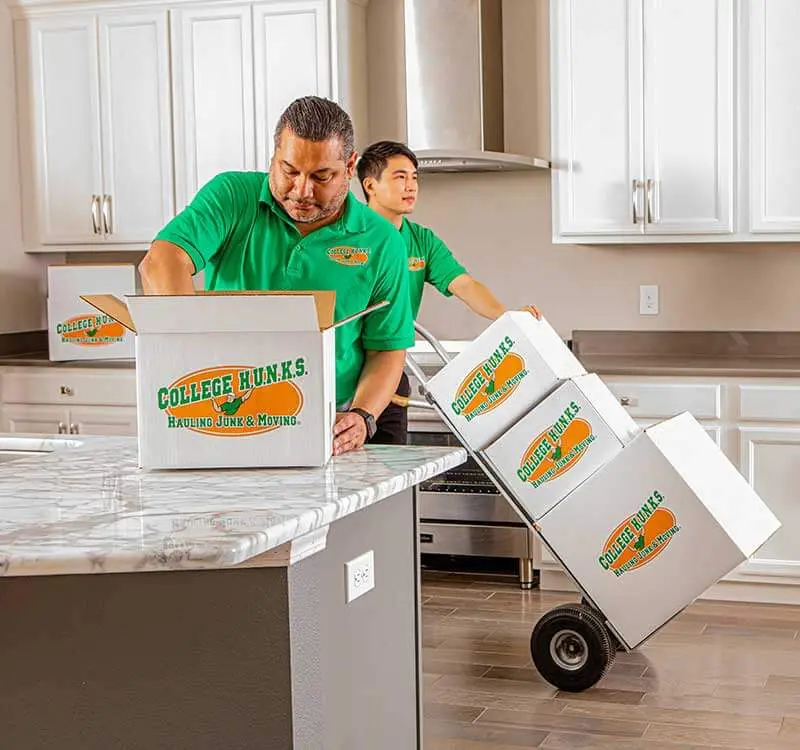
Crew is the whole product. The truck is a commodity. What the customer remembers is whether two people showed up on time, in uniform, and treated their house carefully. Hiring and retaining that crew is the actual job of the owner, and it is harder than it looks from the outside.
Frequently asked questions
Do I need an LLC to start a junk removal business?
No jurisdiction requires an LLC specifically, and you can legally operate as a sole proprietor in most places. That said, the majority of owners do form one, because it separates personal assets from business liability and it makes opening commercial accounts and insurance policies more straightforward. Formation is handled at the state level, and your city or county will typically want a general business license on top of it.
Do you need a CDL for junk removal?
Usually not. A commercial driver’s license is determined by the weight of the vehicle rather than by what you are hauling, and the federal threshold sits at 26,001 pounds gross vehicle weight rating. Most box trucks and dump trailers used in this business fall below that, so a standard driver’s license is sufficient. A small number of states apply their own thresholds, so confirm the rule where you operate before you commit to a vehicle.
What kind of truck do you need for junk removal?
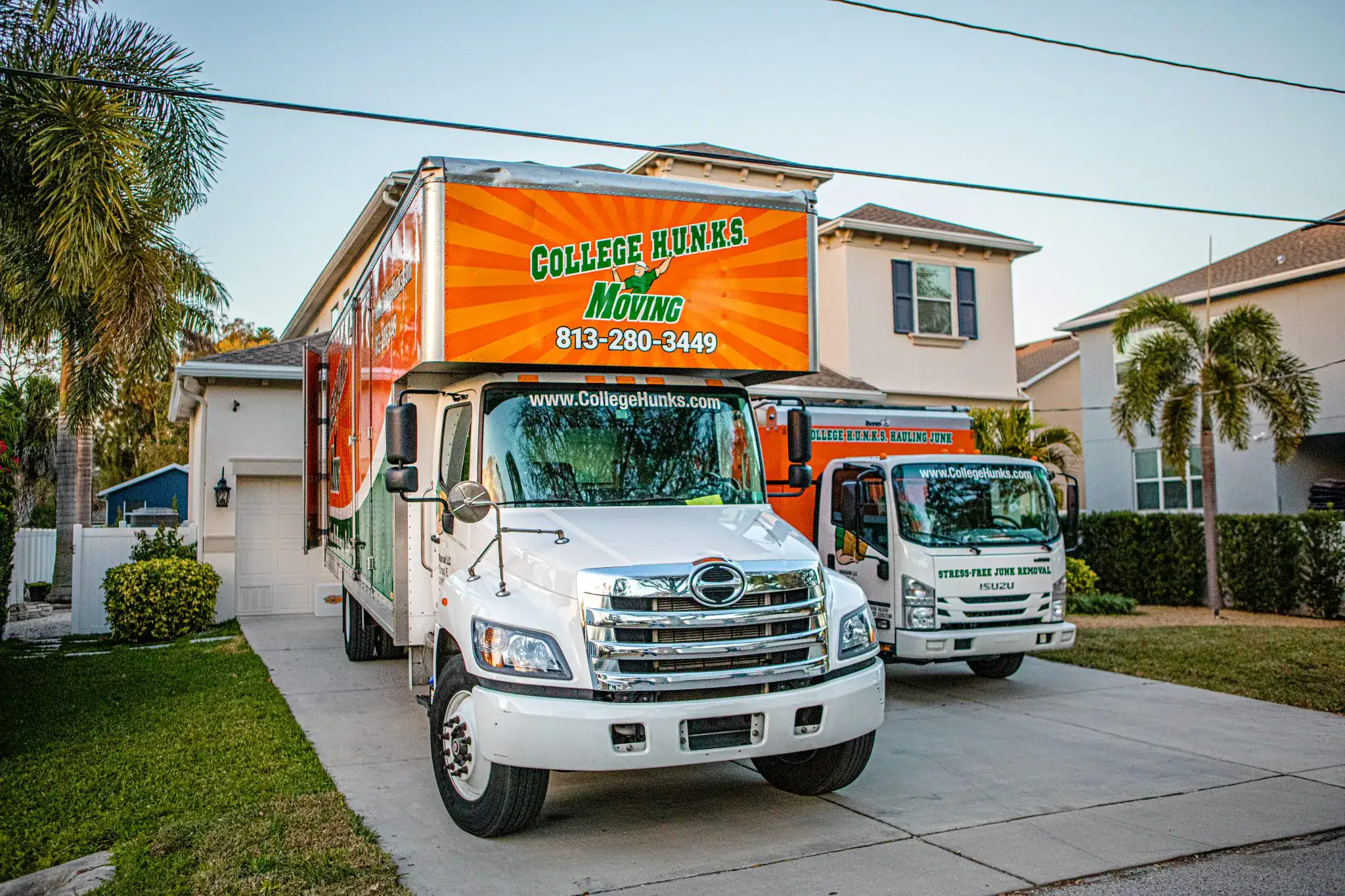
The two common setups are a box truck with a dump body and a pickup paired with a dump trailer. The trailer route has a lower barrier to entry and is easier to park, while a dedicated box truck holds more per trip, looks more established to a customer, and gives you a much larger surface for branding. Whichever you choose, the deciding factor is how many trips you can avoid, because every extra run to the transfer station is time you are not billing.
How long does it take to start a junk removal business?
An independent operator who moves quickly is generally looking at one to three months from decision to first paid job. Registration and insurance move fast; the delays come from acquiring and upfitting a vehicle and from opening disposal accounts, which often require a credit application. Reaching consistent weekly volume takes longer, because that depends on local visibility and reviews rather than on paperwork.
Is junk removal a year-round business?
It runs year-round, but it is not flat. Spring cleanouts and summer moving season carry the heaviest volume in most markets, and winter weeks are quieter almost everywhere outside the warmest climates. Owners smooth that curve by building commercial and property management accounts, which book more evenly than residential work, or by adding a second service line so the same crew and truck stay busy when junk volume dips.
Related reading
- What licenses and permits a junk removal business needs, including when a truck actually needs a CDL.
- How to write a junk removal business plan, the version a lender will actually read.
- How to build a junk removal pricing sheet, and what has to be built into the price.
- How to start a box truck business, the three lanes, CDL rules, and what a franchise changes about filling the truck.
- Equipment needed for a junk removal business, the full gear list and the order to buy it in.
- Insurance for a junk removal business, the coverages to carry and the gaps that catch new haulers.
- Junk removal marketing strategies, what it really takes to keep a truck booked.
Financial information shared in this content is drawn from Item 19 of the 2026 CHHJ Franchising, L.L.C. Franchise Disclosure Document (Issuance Date: April 30, 2026, as amended August 26, 2026). See Item 19 for material assumptions, the underlying data set, and full required disclosures. Past performance does not guarantee future results. New franchisees may earn less.
This information is not an offer to sell or solicitation to buy a franchise. A franchise offering can only be made through the delivery of a Franchise Disclosure Document. Certain states regulate the offer and sale of franchises; if you are a resident of one of these states, we will not offer you a franchise unless we have complied with applicable pre-sale registration and disclosure requirements in your state.
College Hunks Hauling Junk®, College Hunks Moving®, and the H.U.N.K.S logo are registered trademarks of CHHJ Franchising, L.L.C. © 2026 CHHJ Franchising, L.L.C. All rights reserved.

Twenty minutes with our team.
The model, the live territory map, and the unit economics for your market. No script, no pressure.
Qualifying veterans and first responders receive a discount on the initial franchise fee.
Could this be your story?
Book a call with the franchise development team. They’ll walk you through the model, the live territory map, and the unit economics for your market.
More from the newsroom.
Hand-picked from the same category. All stories →
-
What Makes a Recession Resistant Franchise?
A recession resistant franchise sells needs-based services to many small customers. Here is how to test any brand against that bar, with sourced data.
-
Zeddrick Hernandez: Oil Field Tech to Midland/Odessa College HUNKS Owner
Zeddrick Hernandez spent four years in the oil field and ran a car wash site before that. Now he’s bringing College HUNKS junk removal and moving to Midland/Odessa, Texas.
-
Brady Wright: IU Student to Bloomington College HUNKS Owner
IU student Brady Wright signed a College HUNKS franchise to open in Bloomington, Indiana, before graduating. How he got there and what he plans to build.