Franchise vs chain is a question of ownership versus scale. A chain is any group of locations operating under one brand with shared standards. A franchise is a legal arrangement in which an independent owner licenses that brand and system from a franchisor. One brand can be both at once, and many of the largest ones are.
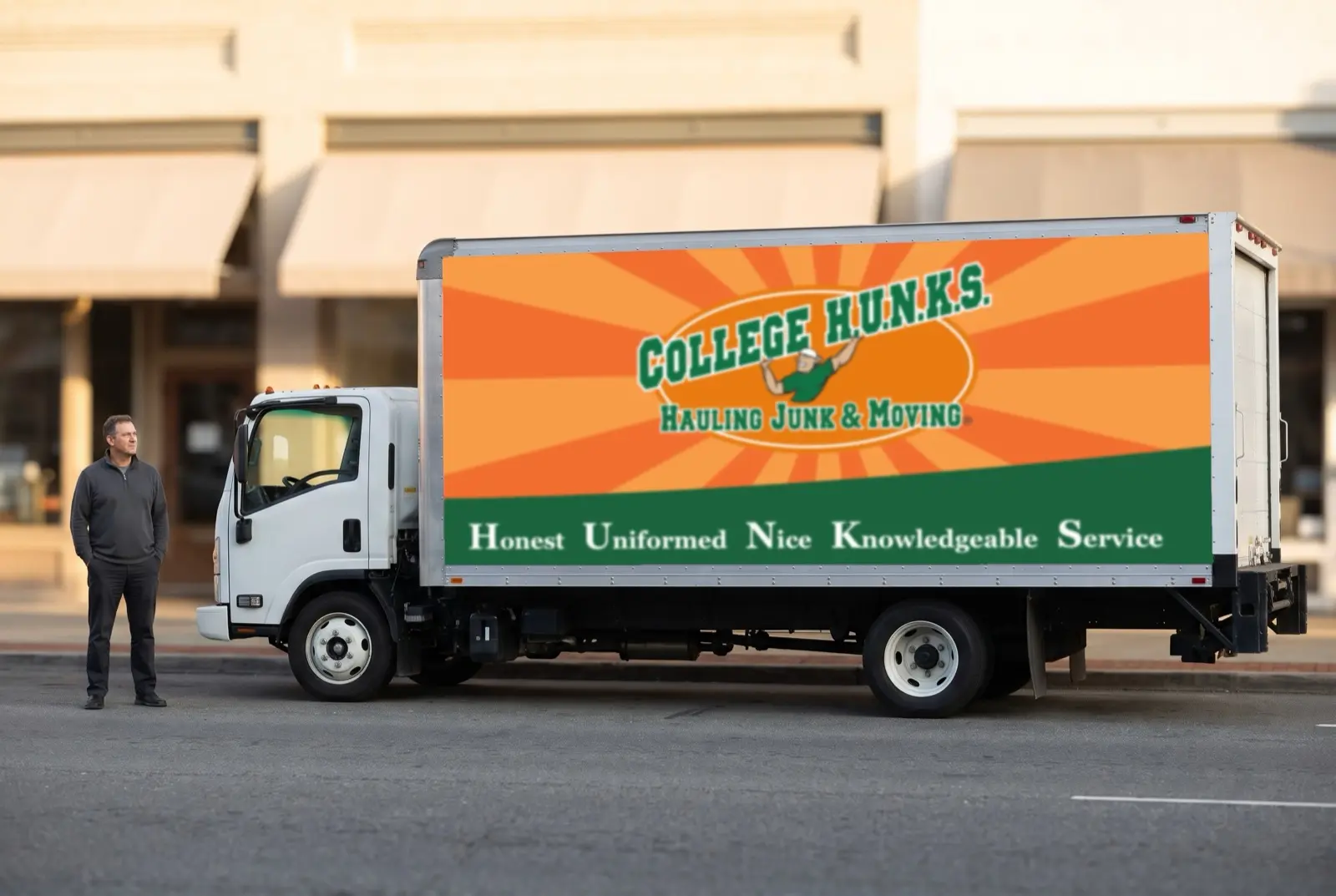
College Hunks Hauling Junk® shows how that works in practice. At the end of 2025 the College HUNKS system had 165 outlets: 159 franchised and 6 company-owned (Franchise Disclosure Document, Item 20). All 165 make it a chain. The 159 are franchises. For someone weighing ownership, that split decides whether there’s anything to buy at all.
Franchise vs chain: what is the actual difference?
The difference between a franchise and a chain is that “chain” describes how many locations share a brand, while “franchise” describes who owns them and under what contract. Under the FTC Franchise Rule (16 CFR Part 436), a franchise needs three things: the right to operate under the franchisor’s trademark, significant control or assistance from the franchisor, and a required payment to it. Nothing in that definition requires a second location. The rule sets no comparable test for a chain.
The comparison that matters to a buyer is between the two ways a chain location can be owned:
| Question | Company-owned chain location | Franchised chain location |
|---|---|---|
| Who owns the local business? | The parent company | An independent franchisee |
| Who funds the opening? | The parent company | The franchisee, often with outside financing |
| Who leads the team? | A manager employed by the parent company | An owner who hires and leads their own team |
| Who keeps what the location earns? | The parent company | The franchisee, after costs and fees to the franchisor |
| Who sets brand standards? | The parent company, through company policy | The franchisor, through the franchise agreement |
| What does the person running it sign? | Employment paperwork | A franchise agreement for a set term |
| What disclosure comes first? | None required by the FTC Rule | A Franchise Disclosure Document at least 14 calendar days before signing or payment |
If you’d like to see that right-hand column filled in with a real system’s details, talk to the franchise development team.
Is a franchise a chain?
A franchise is part of a chain once its brand has multiple locations running to shared standards, which describes nearly every franchise system. The reverse does not hold. A chain counts as a franchise only where its locations are independently owned under a license from the brand.
From the sidewalk, a franchised location and a company-owned location look identical. The contract behind the counter is what differs. Our post on franchisor vs franchisee covers the two parties to that contract and what each one does.
Are Chick-fil-A, Wendy’s, Starbucks and 7-Eleven chains or franchises?
All four brands are chains, and three of them use franchising as a core part of the U.S. model. Their ownership mixes differ, which is why a brand’s fame tells a buyer very little.
Is Chick-fil-A a franchise or a chain?
Chick-fil-A is both a chain and a franchise. The restaurants form a national chain, and the local operators are called Franchisees on Chick-fil-A’s own franchising page.
Is Wendy’s a franchise or a chain?
Wendy’s is both a chain and a franchise. Franchisees run most Wendy’s restaurants, and the company operates a smaller group itself, as its fiscal 2025 annual report lays out.
Is Starbucks a chain or a franchise?
Starbucks is a chain that does not sell franchises in the United States. Its stores are company-operated or licensed, and its fiscal 2025 annual report says traditional franchising is used only in a limited number of international markets.
Is 7-Eleven a chain or a franchise?
7-Eleven is both a chain and a franchise. The company offers franchises in the United States and also keeps corporate stores.
Why do some chains franchise while others stay company-owned?
Chains franchise to expand on local owners’ capital and leadership, and they stay company-owned to keep direct control of every location. A company-owned chain funds each opening and employs each manager, so its pace is limited by its own balance sheet and hiring. A franchised chain shares that load with owners who put up the capital and lead the local team.
The trade is control. A company can change how a store operates with a memo. A franchisor works inside a contract, so standards, training and support get written down and agreed to in advance.
Plenty of brands run a hybrid and keep some company-owned locations alongside franchised ones. College HUNKS runs 6 company-owned outlets alongside its 159 franchised ones, and the franchise development team can explain how those fit into the system.
Can you buy a location of a chain that does not franchise?
A chain that does not franchise has no local location to sell an individual buyer. You can work for that company or buy its publicly traded stock, but neither one makes you the owner of a store. A prospective owner has to start with brands that grant franchises, then compare those brands against each other.
Licensed locations are a separate category and can look like franchises from the outside. Our guide to licensing vs franchising explains what a buyer gets under each arrangement.
How can you tell a brand’s franchise and company-owned mix before you buy?
Item 20 of the Franchise Disclosure Document (FDD) shows a brand’s franchised and company-owned outlet counts for its three most recent fiscal years. Every franchisor selling in the United States has to include it, so you can compare one brand’s mix with another’s on the same footing.
Item 20 is a set of tables, and each one answers a different question:
- Systemwide outlet summary. Are franchised and company-owned counts rising, flat or falling?
- Transfers. How often do franchised outlets change hands?
- Status of franchised outlets. How many opened, closed, or were reacquired by the franchisor, by state?
- Status of company-owned outlets. Is the franchisor opening its own locations, closing them, or selling them to franchisees?
- Projected openings. Where does the franchisor expect growth next year?
A rising count of closed or reacquired outlets tells a buyer more than the size of the brand. Our walkthrough of all 23 Items of the FDD shows where Item 20 fits. Item 20 also lists current and former franchisees, which gives you real owners to call.

Which is better for a future owner, a franchise or a corporate chain role?
A franchise is the better fit for someone who wants to own a business, because, among chain roles, only a franchise gives the person running a location ownership of the local company. A corporate chain role has its own advantages: a paycheck, benefits and no personal capital at risk. A franchisee gives those up in exchange for equity in something they lead.
The franchise path comes with real commitments. A College HUNKS franchise term runs 10 years, and our breakdown of franchise owner responsibilities goes through what an owner signs up for. Owners take on real obligations too, including a local advertising commitment and Sales & Loyalty Center appointment fees. Both are set out in Items 6 and 11 of the FDD, and the franchise development team walks through each one on a call.
What does a franchised chain look like in junk removal and moving?
A College HUNKS franchise combines junk removal and College Hunks Moving® in one territory, on one technology stack, with a local owner leading the team. Each concept carries its own fee and its own truck. Our page on the two-in-one model shows how the two concepts work side by side.
For College HUNKS owners, a national Sales & Loyalty Center takes orders, schedules appointments and routes jobs to owners by zip code (FDD Item 1), and each owner works with a Marketing Coach and a Franchise Business Coach. An independent hauler has to build each of those functions alone.
The estimated initial investment for both concepts in one zone is $193,100 to $345,500 (FDD Item 7). See the full investment breakdown for each line and the Item 19 revenue picture for the disclosed results.
Is a franchised chain the right path for you?
A franchised chain is the right path for a leader who wants equity in a local company, a proven system behind it, and is comfortable operating to a brand’s standards. Someone who wants total creative control will be happier starting from scratch, and our comparison of buying a franchise vs starting a business can help you sort that out.
If you’re weighing whether a College Hunks Hauling Junk® franchise fits your goals, start the conversation with our Franchise Development team and see if your market is still open. We read every inquiry and there’s no pressure, just answers.
Disclosures
Financial information shared in this content is drawn from Item 19 of the 2026 CHHJ Franchising, L.L.C. Franchise Disclosure Document (Issuance Date: April 30, 2026, as amended August 26, 2026). See Item 19 for material assumptions, the underlying data set, and full required disclosures. Past performance does not guarantee future results. New franchisees may earn less.
This information is not an offer to sell or solicitation to buy a franchise. A franchise offering can only be made through the delivery of a Franchise Disclosure Document. Certain states regulate the offer and sale of franchises; if you are a resident of one of these states, we will not offer you a franchise unless we have complied with applicable pre-sale registration and disclosure requirements in your state.
College Hunks Hauling Junk®, College Hunks Moving®, and the H.U.N.K.S logo are registered trademarks of CHHJ Franchising, L.L.C. © 2026 CHHJ Franchising, L.L.C. All rights reserved.

Twenty minutes with our team.
The model, the live territory map, and the unit economics for your market. No script, no pressure.
Qualifying veterans and first responders receive a discount on the initial franchise fee.
Could this be your story?
Book a call with the franchise development team. They’ll walk you through the model, the live territory map, and the unit economics for your market.
More from the newsroom.
Hand-picked from the same category. All stories →
-
John DiJulius on Turning Customers Into Brand Evangelists
Customer experience expert John DiJulius tells Nick Friedman why earned sales beat bought sales and how owners turn customers into brand evangelists.
-
Franchisor vs Franchisee: Who Does What?
Franchisor vs franchisee: who owns the brand, who runs the business, who pays whom, and how the FDD draws the line between the two roles.
-
Businesses to Start With 100K: What It Buys
Businesses to start with 100K, compared: where the money goes, who finds customers, and when $100K works better as a down payment.