A low-cost restaurant franchise almost always means a low initial franchise fee, not a
low total investment. The fee is one line in Item 7 of the Franchise Disclosure Document.
The rest of that page, the build-out, the equipment, the licensing and the working capital, is where
the real number lives, and it is routinely five to ten times the fee. If you are comparing brands on
the advertised fee, you are comparing the smallest number on the page.
What does low cost actually mean in a restaurant franchise?
It usually means one of two very different things, and they are worth separating. Sometimes it
means a genuinely smaller format: a kiosk, a mobile unit, or a counter inside an existing retailer.
Those really do cost less, because they remove the build-out and shrink the real estate.
Other times it means a low fee attached to an entirely traditional location with a dining room
and a kitchen. That is not a cheap franchise. That is a normal franchise with an attractive number
on the brochure.
Why is the franchise fee the wrong number to compare?
Because the fee buys the license and the training, and almost nothing else.
Everything that actually gets the doors open sits in the rest of Item 7. Two brands can advertise
nearly identical fees and still differ enormously in what it takes to open, purely because one needs
a kitchen and the other needs a van.
The useful habit is simple. Open Item 7 for each brand you are considering, find the low and high
of the total initial investment, and write those two numbers side by side. Then ask what the spread
is made of. A wide range usually means real estate and construction, which is also the part most
likely to run over.
Why do cheapest-franchise lists give such wide ranges?
Because they average together formats that have almost nothing in common. One
brand’s Item 7 range can run from a cart inside someone else’s building at the bottom to a
standalone location with a full kitchen at the top. Printed as a single span, that is not a price
range so much as two different businesses sharing a logo.
A range that wide tells you the list is reporting the full Item 7 low and high without saying
which format each end describes. That is accurate as far as it goes, and it is hard to plan against. When you see
one, go to the source document and find out which format you would actually be buying, then read
only the numbers attached to that format.
Where does the rest of the money go?
In a traditional restaurant, the bulk becomes leasehold improvements inside a building you do not
own: hoods, walk-in coolers, grease traps, seating, signage, sometimes a drive-thru lane. Then
equipment, initial inventory, permits and licenses, insurance, and enough working capital to survive
the ramp before the location finds its regulars.
Two of those deserve more attention than they usually get. Working capital is the line
first-time buyers underfund most often, and leasehold improvements are the line that is hardest to
recover if the location does not work.
What does a service franchise cost by comparison?
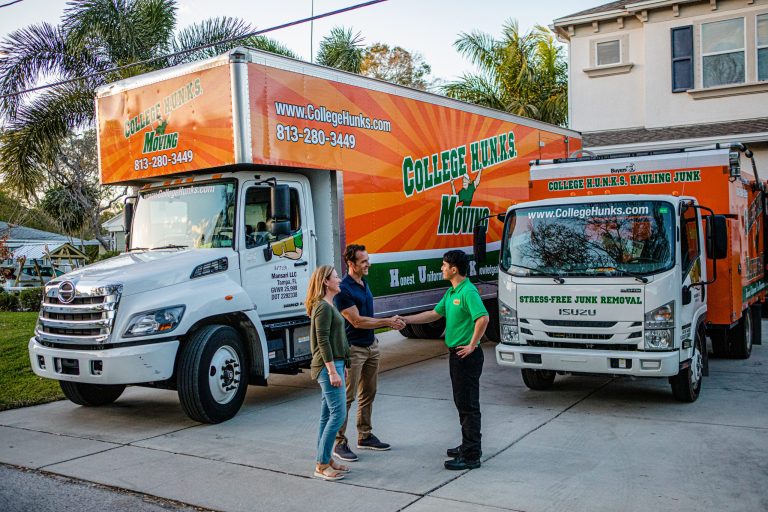
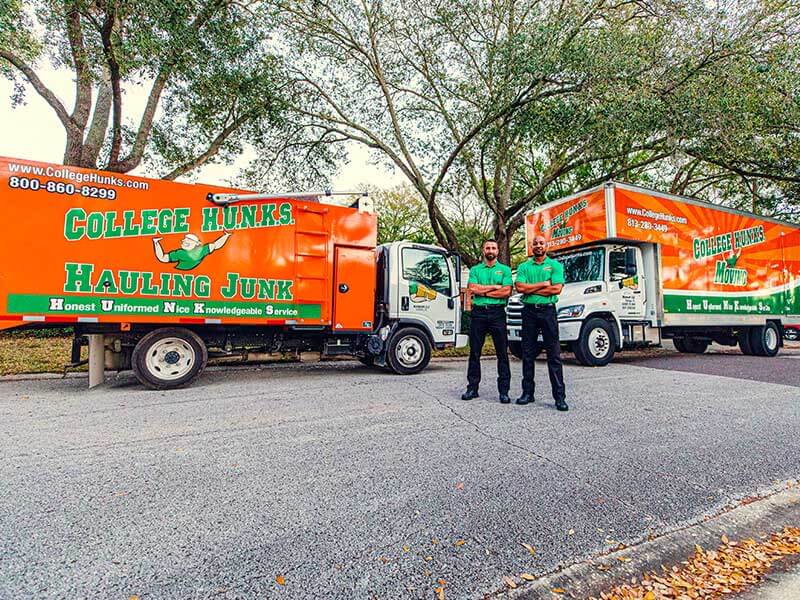
A College Hunks Hauling Junk® franchise runs $193,100 to $345,500 in total initial
investment for both the junk removal and College Hunks Moving® concepts in a single
Zone. That figure is disclosed in Item 7 of the 2026 Franchise Disclosure Document.
| What you are buying | Total initial investment | Initial franchise fee |
|---|---|---|
| Both concepts, one Zone | $193,100 to $345,500 | $65,000 |
| Junk removal only | $138,100 to $232,000 | $35,000 |
| Moving only | $191,600 to $315,500 | $35,000 |
Notice that this overlaps with plenty of quick-service ranges rather than undercutting them. The
difference is not that it is cheaper. It is that the largest capital line is vehicles and equipment,
which hold a resale market, instead of improvements built into a leased building. You also need a
$200,000 net worth to qualify.
How do you compare two brands honestly?
Put the two Item 7 tables next to each other and ignore everything else on both websites. Then
add three questions. How long until each one opens, because a business that opens in four months
starts earning sooner than one that opens in fourteen. What is owed every month, which is Item 6.
And what do existing locations actually produce, which is Item 19 when the brand publishes one.
Our restaurant franchise alternatives comparison runs exactly that exercise
across categories, and our investment page breaks our own
Item 7 down line by line.
Keep reading
The rest of this comparison, one question at a time.
- Is Owning a Fast Food Franchise Worth It?, whether a QSR franchise earns its cost
- Franchise With the Fastest Return on Investment, what you can compare before you sign
- How Long Does It Take to Open a Franchise?, the timeline from signing to opening
Talk it through with the franchise development team
If you are weighing a food franchise against a service franchise, we would rather give you the real numbers than a brochure. Talk to our Franchise Development team, or check whether a territory is still open in your market. Start with the side-by-side on restaurant franchise alternatives if you want the numbers first. We read every inquiry, and there is no pressure.
Disclosures
Financial information shared in this content is drawn from Item 19 of the 2026 CHHJ Franchising, L.L.C. Franchise Disclosure Document (Issuance Date: April 30, 2026, as amended August 26, 2026). See Item 19 for material assumptions, the underlying data set, and full required disclosures. Past performance does not guarantee future results. New franchisees may earn less.
This information is not an offer to sell or solicitation to buy a franchise. A franchise offering can only be made through the delivery of a Franchise Disclosure Document. Certain states regulate the offer and sale of franchises; if you are a resident of one of these states, we will not offer you a franchise unless we have complied with applicable pre-sale registration and disclosure requirements in your state.
College Hunks Hauling Junk®, College Hunks Moving®, and the H.U.N.K.S logo are registered trademarks of CHHJ Franchising, L.L.C. © 2026 CHHJ Franchising, L.L.C. All rights reserved.

Twenty minutes with our team.
The model, the live territory map, and the unit economics for your market. No script, no pressure.
Qualifying veterans and first responders receive a discount on the initial franchise fee.
Could this be your story?
Book a call with the franchise development team. They’ll walk you through the model, the live territory map, and the unit economics for your market.
More from the newsroom.
Hand-picked from the same category. All stories →
-
Moving Company Marketing: How Movers Stay Booked
Moving company marketing that fills the calendar: trust signals, lead sources, estimate follow-up and seasonality, plus what a franchise takes on.
-
Costs of Operating a Franchise in 2026
The costs associated with operating a franchise fall into two streams: franchisor fees on gross sales, and the operating costs you carry anyway.
-
Moving Company License Requirements (2026)
What moving company license do you need? USDOT authority for interstate moves, state permits for local ones, plus the LLC, insurance and timeline steps.