
No franchisor can responsibly quote you a payback period for a business that does not
exist yet. Payback depends on your market, your cost structure, your staffing, and how well you
run the business, none of which the franchisor controls. What you can compare before you sign is how
quickly a category opens and how much capital it ties up while you wait, because a business that
opens in four months starts generating sales roughly ten months earlier than one that takes
fourteen.
Why can nobody quote you a payback period?
Because a payback figure is a prediction about a business that does not exist yet, in a market
the franchisor has never operated, run by an owner they have just met. Franchise regulation treats
financial claims seriously for exactly this reason. A brand may only make a financial performance
representation if it appears in Item 19 of its Franchise Disclosure Document, backed by real data
and the assumptions behind it.
So if a payback figure comes up while you are evaluating any brand, ask where it appears in
Item 19. That is the document built to carry financial performance claims, and it is the right place
to check any number you plan to build a decision on.
What actually drives time to first revenue?
Almost entirely whether the model needs a building. Concepts that require a
customer-facing location spend most of their pre-opening months on site selection, lease
negotiation, permitting and construction. Concepts that dispatch crews to the customer skip that
entire sequence.
Zoom Room, a fitness franchisor, publishes the breakdown plainly: brick-and-mortar concepts
usually take four to nine months, restaurants often six to twelve, and models with no
customer-facing build can launch in 30 to 90 days. Jack in the Box states on its own franchising
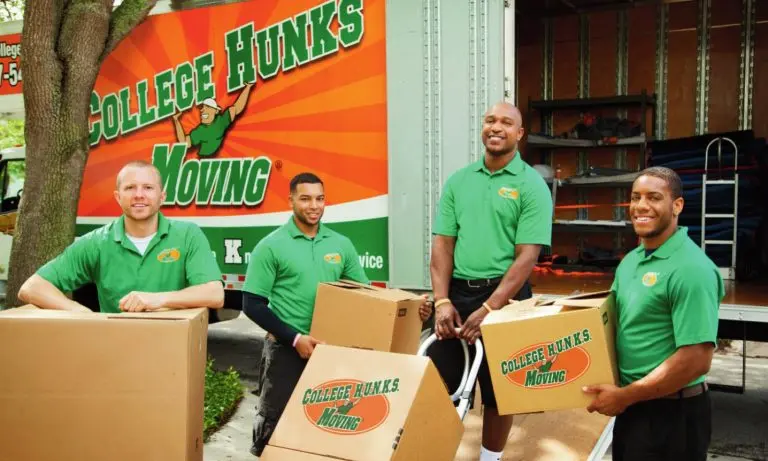
site that it typically offers an 18-month term to open a first location. A College Hunks Hauling
Junk® territory opens in 110 to 140 days, and the franchise agreement requires it to be open
within 150 days of signing, per Item 11.
What do the disclosure documents let you compare?
Four things, and they are enough to build a real model.
- Item 7 gives you total initial investment, low and high. This is your capital
at risk, not the franchise fee. - Item 11 gives you time to open, and often a contractual deadline.
- Item 6 gives you every recurring fee, which is what actually shapes margin.
- Item 19 gives you what existing locations produce, when the brand publishes
one.
Build your own payback estimate from those four and your own assumptions. It will be rougher than
a number someone hands you, and it will be yours, which makes it far more useful.
What does College Hunks disclose?
Item 19 of the 2026 Franchise Disclosure Document reports gross sales and EBITDA grouped by how
long a location has been open. Read the medians rather than the averages, because averages in a
system like this get pulled upward by the oldest locations.
| Time open | Locations | Average gross sales | Median gross sales | Median EBITDA |
|---|---|---|---|---|
| 13 to 36 months | 25 | $730,493 | $691,222 | $44,031 |
| 37 to 60 months | 37 | $1,126,072 | $868,852 | $80,289 |
| 60+ months | 82 | $1,999,230 | $1,555,903 | $137,005 |
That EBITDA caveat matters more than the headline. Because it excludes vehicle payments and owner
compensation, it is not what lands in your pocket, and treating it that way will produce a payback
estimate that is far too optimistic.
How should you run the comparison yourself?
Take two brands you are seriously considering. Write down Item 7 high for each, since projects
run long more often than short. Add the months to open from Item 11 and the recurring fees from
Item 6. Then apply Item 19 where it exists, using medians and the lowest tenure cohort rather than
the system average, because that is the cohort you will actually be in during year one.
The answer you get will not be precise. It will show you which category ties up more capital for
longer, which is the question underneath “what pays back fastest” in the first place. Our
restaurant franchise alternatives comparison runs that exercise across
categories, and the revenue potential page covers our Item
19 figures in more detail.
Keep reading
The rest of this comparison, one question at a time.
- Is Owning a Fast Food Franchise Worth It?, whether a QSR franchise earns its cost
- Low-Cost Restaurant Franchises: What Cheap Actually Costs, why a low franchise fee is not a low investment
- How Long Does It Take to Open a Franchise?, the timeline from signing to opening
Talk it through with the franchise development team
If you are weighing a food franchise against a service franchise, we would rather give you the real numbers than a brochure. Talk to our Franchise Development team, or check whether a territory is still open in your market. Start with the side-by-side on restaurant franchise alternatives if you want the numbers first. We read every inquiry, and there is no pressure.
Disclosures
Financial information shared in this content is drawn from Item 19 of the 2026 CHHJ Franchising, L.L.C. Franchise Disclosure Document (Issuance Date: April 30, 2026). See Item 19 for material assumptions, the underlying data set, and full required disclosures. Past performance does not guarantee future results. New franchisees may earn less.
This information is not an offer to sell or solicitation to buy a franchise. A franchise offering can only be made through the delivery of a Franchise Disclosure Document. Certain states regulate the offer and sale of franchises; if you are a resident of one of these states, we will not offer you a franchise unless we have complied with applicable pre-sale registration and disclosure requirements in your state.
College Hunks Hauling Junk®, College Hunks Moving®, and the H.U.N.K.S logo are registered trademarks of CHHJ Franchising, L.L.C. © 2026 CHHJ Franchising, L.L.C. All rights reserved.

Twenty minutes with our team.
The model, the live territory map, and the unit economics for your market. No script, no pressure.
Qualifying veterans and first responders receive a discount on the initial franchise fee.
Could this be your story?
Book a call with the franchise development team. They’ll walk you through the model, the live territory map, and the unit economics for your market.
More from the newsroom.
Hand-picked from the same category. All stories →
-
Buying a Franchise vs Starting a Business: How to Decide
Buying a franchise vs starting a business: an honest look at upfront cost, ongoing fees, speed to revenue, control, and exit for a serious buyer.
-
What Is a Multi-Unit Franchisee?
A multi-unit franchisee owns two or more territories of one brand. What changes when you scale, and what a franchisor wants before approving your second.
-
12 Questions to Ask a Franchisor Before You Buy In
The questions to ask a franchisor before you buy: earnings and Item 19, real support, a protected territory, and owner validation. Your due-diligence checklist.