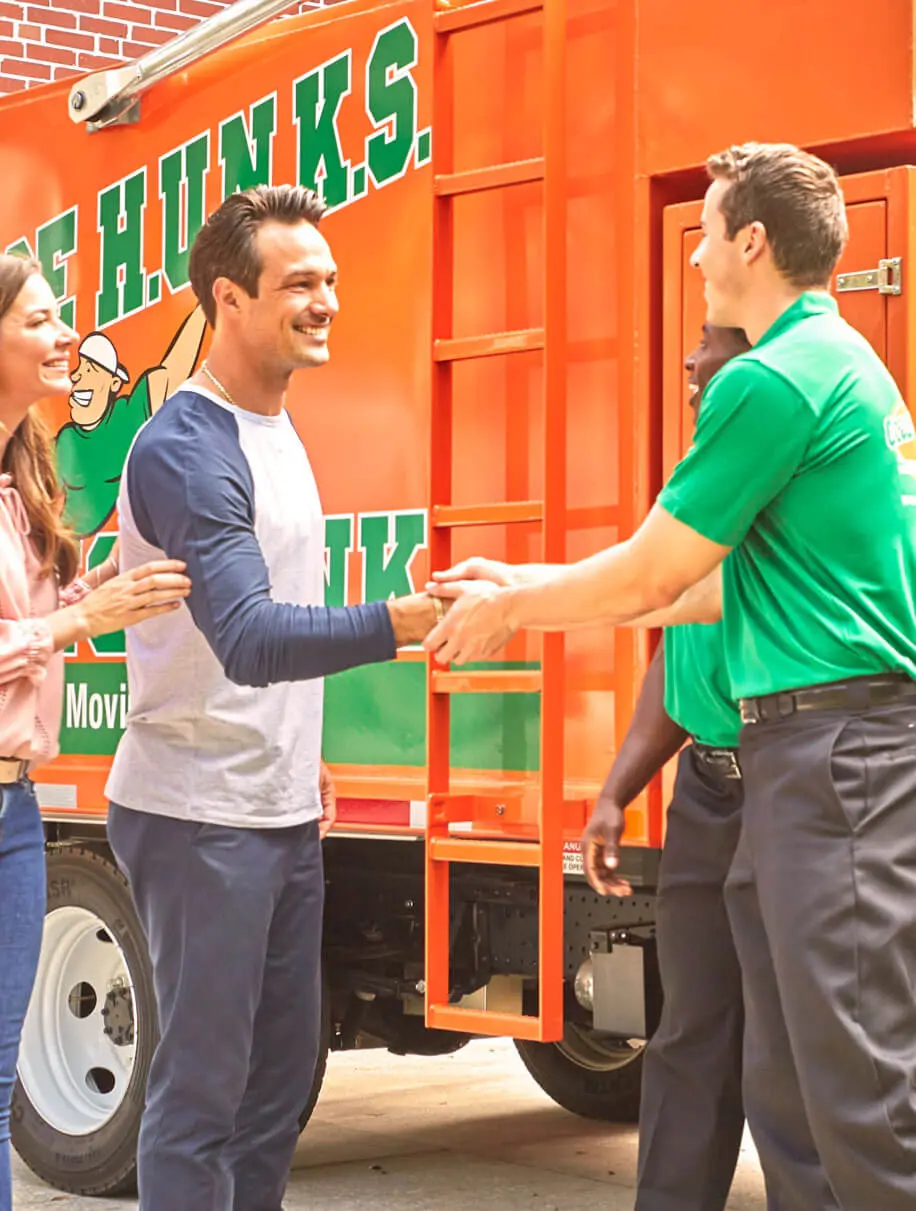
Converting your independent junk-removal business to a franchise means keeping the customers, crews, and equipment you already have while adding a national brand, a booking center that feeds you jobs, and a resale market for the equity you build. You skip the hardest part of franchising, the cold start, because you are already running the business. The trade you take on is a royalty and a set of system standards in exchange for infrastructure you cannot build alone. Here is how a conversion actually works.
What does converting an independent junk business to a franchise mean?
A conversion is when an established independent operator joins a franchise system and rebrands an existing business under the franchisor’s name and playbook. You are not starting from zero. You bring your book of business, your trucks, and your team, and you adopt the brand, the technology, and the operating standards in return for the support and demand engine behind the name. For an owner who has hit a ceiling on their own, it is the fastest route into a national system.
Why would an established operator convert?
Owners typically convert for one of three reasons: they are losing local search visibility to national brands, they want an exit path and a resale market for what they built, or they are tired of generating every lead themselves. A franchise answers all three. You gain brand recognition a solo operator cannot buy, a booking center that fills the calendar, and a system with a real resale value when you are ready to sell.
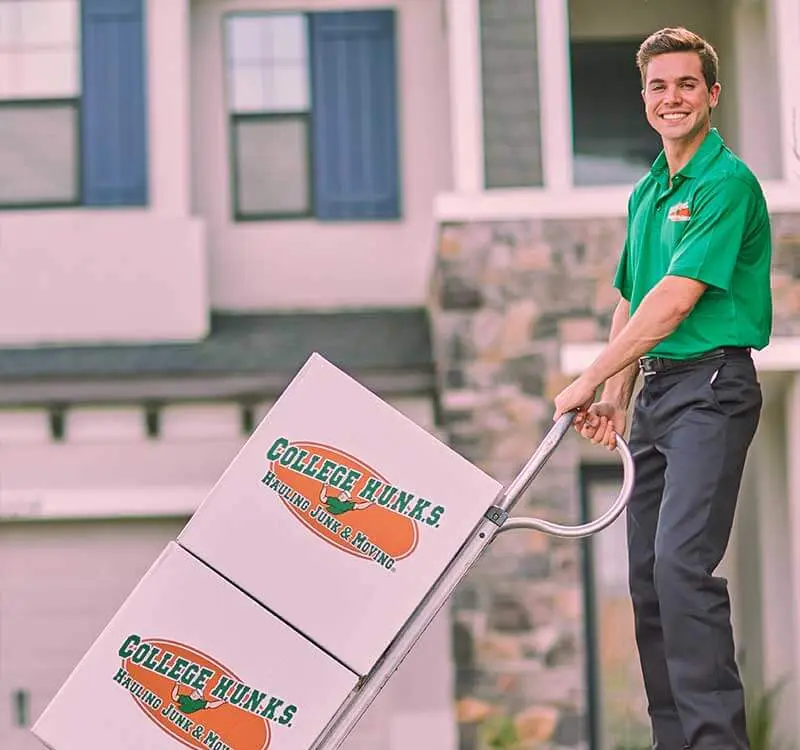
What do you keep, and what changes?
You keep the equity you have built. You adopt the standards that make the brand consistent.
| You keep | You adopt |
|---|---|
| Your existing customers and referral base | The brand name, uniforms, and truck wraps |
| Your trucks and equipment (where they meet standards) | The franchisor’s technology and booking system |
| Your crews and local knowledge | Operating standards and brand playbook |
| Day-to-day ownership as an owner-operator | An ongoing royalty and system fees |
What does a College Hunks conversion add that you cannot build alone?
Beyond the brand, a College Hunks Hauling Junk® conversion adds a national Sales & Loyalty Center that books thousands of jobs a week, a dedicated Marketing Coach and Franchise Business Coach, and about $30 million a year in national brand media. It also opens a second revenue line most independents never had: College Hunks Moving®, run inside the same territory and back office, so a slow junk week can be a busy moving week. That two-in-one structure is the heart of the two-in-one model, and the coaching is a real part of the training and support owners get.
What does a conversion cost compared with a standard franchise?
Less, and the discount is a formula rather than a negotiation. A conversion franchise pays the then-current initial franchise fee reduced by an amount equal to 10% of your existing business’s total sales for the previous year, and that reduction is capped at $15,000 per concept, or $30,000 when both concepts are purchased together (2026 FDD, Item 5). The formula is applied uniformly to every conversion, so what you pay varies only with what your business actually did last year.
The FDD works the example itself: on a $65,000 initial franchise fee, an existing business that generated $300,000 in revenue the previous year has the fee reduced by $30,000, bringing it to $45,000. At $300,000 in prior-year sales the both-concept cap is reached exactly, so revenue above that level does not increase the discount any further.
The initial franchise fee is fully earned when paid and non-refundable, and it includes the initial license fee for the proprietary software you are required to use.
Is converting worth the royalty?
The honest math is whether the demand engine and brand grow your revenue by more than the royalty costs you. For an operator already generating jobs at capacity, the booking center and the moving concept often open room that a solo brand could not. For an operator who prefers full independence and low overhead, staying independent may fit better, and buying a franchise vs starting a business lays out that same trade for someone who has not built anything yet. The clearest way to judge is to compare your current lead cost and growth ceiling against what the system provides, which is part of why owners choose HUNKS.
How long does a conversion take?
A conversion usually moves faster than a cold start, because the business is already running. The timeline centers on the rebrand and onboarding: signing the agreement, wrapping trucks and updating uniforms, moving your operation onto the franchisor’s technology and booking system, and completing the training that brings your team up to brand standards. Your existing revenue keeps flowing while that happens, which is a real part of the appeal. The exact window depends on your fleet size, your market, and how quickly you adopt the system, and it is one of the first things the franchise development team maps out with a converting owner.
Talk to the team about a conversion
If you have not started one yet, how to start a junk removal business walks the independent route first. If you run an independent junk-removal business and want to see what a conversion would look like for you, talk to our Franchise Development team and see if your market is still open. We look at every inquiry ourselves, with no hard sell: a candid read on what you would keep, what would change, and whether the numbers work.
Financial information shared in this content is drawn from Item 19 of the 2026 CHHJ Franchising, L.L.C. Franchise Disclosure Document (Issuance Date: April 30, 2026, as amended August 26, 2026). See Item 19 for material assumptions, the underlying data set, and full required disclosures. Past performance does not guarantee future results. New franchisees may earn less.
This information is not an offer to sell or solicitation to buy a franchise. A franchise offering can only be made through the delivery of a Franchise Disclosure Document. Certain states regulate the offer and sale of franchises; if you are a resident of one of these states, we will not offer you a franchise unless we have complied with applicable pre-sale registration and disclosure requirements in your state.
College Hunks Hauling Junk®, College Hunks Moving®, and the H.U.N.K.S logo are registered trademarks of CHHJ Franchising, L.L.C. © 2026 CHHJ Franchising, L.L.C. All rights reserved.
Initial franchise fee and conversion discount figures are drawn from Item 5 of the 2026 CHHJ Franchising, L.L.C. Franchise Disclosure Document (Issuance Date: April 30, 2026, as amended August 26, 2026). Fee terms are subject to change between FDD issuances.
Related reading
- How the dual-revenue model works once you are inside it.
- Franchise requirements and what conversion costs.
- How to read Item 19 of an FDD, worth doing before you sign anything.
- Erick Ramirez on scaling from one territory to two.
- Is a junk removal business profitable?, where the margin actually comes from and what quietly eats it.

Twenty minutes with our team.
The model, the live territory map, and the unit economics for your market. No script, no pressure.
Qualifying veterans and first responders receive a discount on the initial franchise fee.
Could this be your story?
Book a call with the franchise development team. They’ll walk you through the model, the live territory map, and the unit economics for your market.
More from the newsroom.
Hand-picked from the same category. All stories →
-
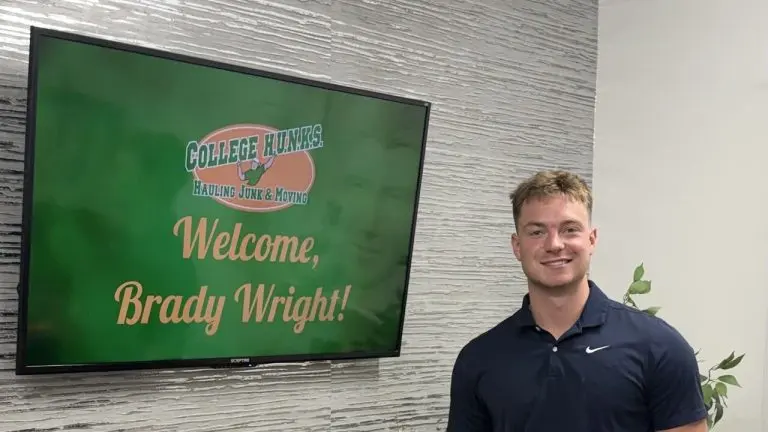
Brady Wright: IU Student to Bloomington College HUNKS Owner
IU student Brady Wright signed a College HUNKS franchise to open in Bloomington, Indiana, before graduating. How he got there and what he plans to build.
-
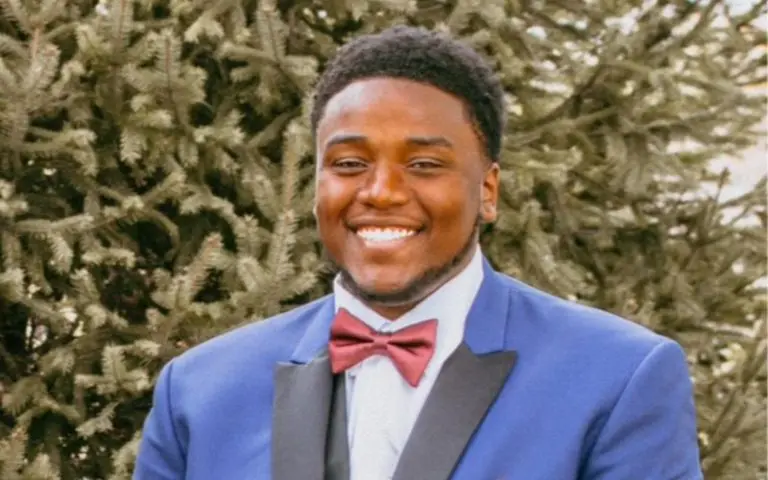
Meet Montez Miles: From Helper to College HUNKS Owner in Indianapolis
Montez Miles worked his way up from helper to operations manager at another mover. Now he’s bringing College HUNKS junk removal and moving to Indianapolis.
-
8 Self-Employment Ideas After 50 for 2026
Eight self-employment ideas for experienced managers over 50, compared by capital, time to first customer and fit, from consulting to a franchise.