Franchise leadership · Hunks Talking Junk
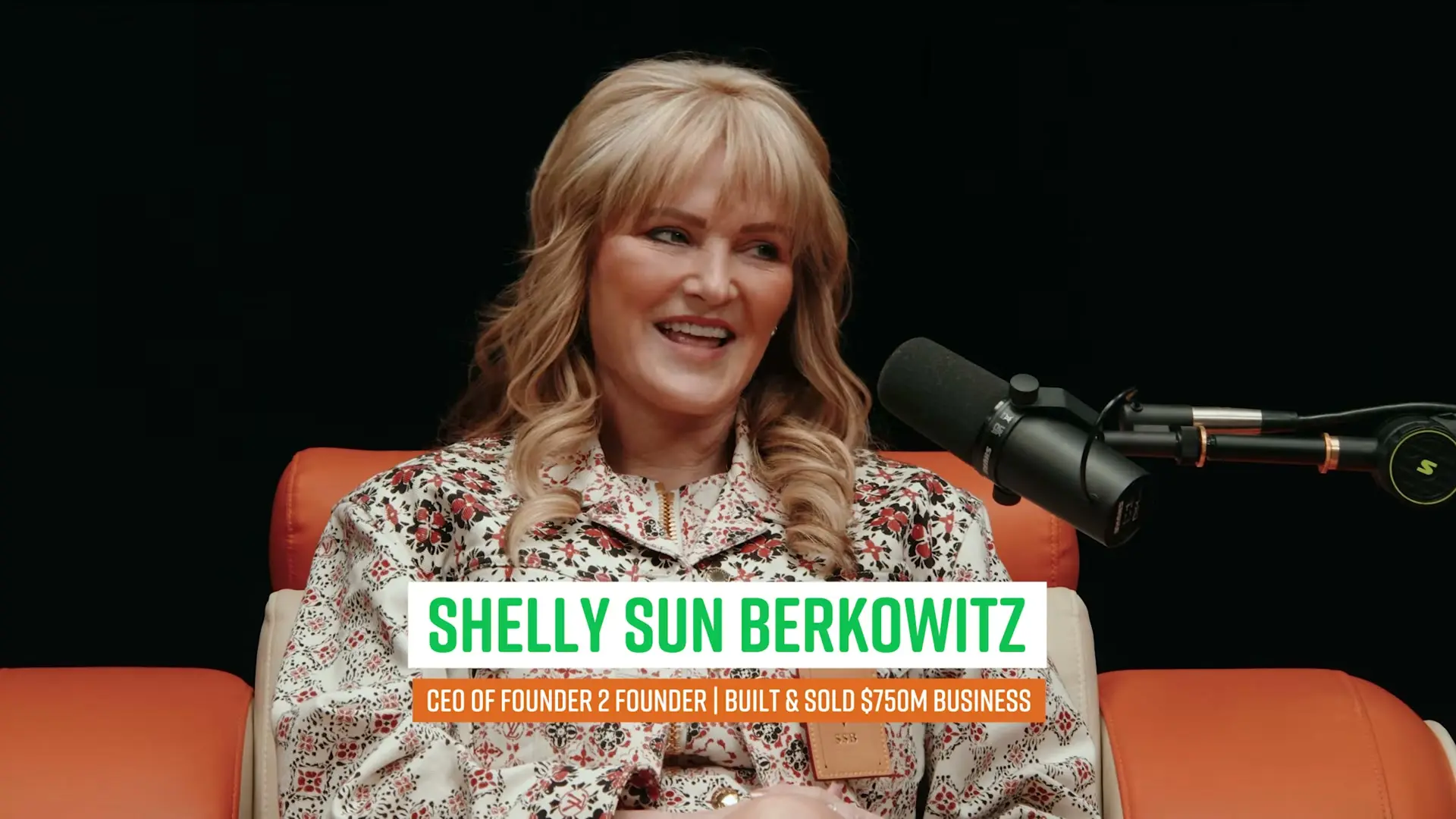
Shelly Sun Berkowitz opened one home care office outside Chicago in 2002 and grew it into BrightStar Care, the $750 million business she sold a few years ago. She is a CPA who never wanted to be an entrepreneur, and the only reason she started a company at all is that her grandmother needed care nobody in the market was willing to provide. She went on to chair the International Franchise Association, and she now sits on the board of College Hunks Hauling Junk® as an investor. Co-founder Nick Friedman got her for about 58 minutes on the newest episode of Hunks Talking Junk.
Here is why that matters if you are evaluating a franchise right now. Almost everything written about qualifying is written from your side of the table: what you can afford, whether the model works in your market, what the validation calls turn up. Shelly spent twenty years on the other side of it, and for nearly the entire run of BrightStar she personally met every candidate before Discovery Day. On this episode she says plainly what she was watching for, and some of it has nothing to do with money. It pairs well with Scott Leffel’s episode, which runs the same evaluation from the buyer’s seat.
Who is Shelly Sun Berkowitz?
Shelly Sun Berkowitz is the founder of BrightStar Care, a home care and medical staffing franchise she built from one Chicago-area location into the $750 million business referenced on the episode, and she is now CEO of Founder 2 Founder. She is a CPA by background, a past chair of the International Franchise Association, and the author of Grow Smart, Risk Less. Since selling BrightStar she has made eight investments through her family office, Next Phase Capital, four of them in franchising. One of them is College HUNKS Hauling Junk & Moving, where she holds a board seat.
The origin story is a family one. Her grandmother needed care in Florida while the family was in Illinois, and she needed both non-medical help and medical care that a private pay provider would deliver at home. No single company did both. The family spent about six months inside that gap, her grandmother passed away, and Shelly could not put it down.
What she did next is the part worth copying. Before she opened anything, she ran conversations with prospective customers, caregivers, and referral sources to find out whether the gaps she had experienced were gaps other people saw too. They were. That is the whole test, and it is the same test you should be running on any franchise category you are considering.
How can you tell if a franchise is worth buying into?
Check whether the unit economics leave enough margin for you after royalties, and check whether the franchisor pays real attention to franchisee profit rather than only to systemwide growth. Those are the two tests Shelly applies when founders ask her to help them franchise, and they work just as well pointed the other direction, from the buyer’s chair.
Her math on the first one is blunt. If a company-owned unit produces only a 10 percent bottom line, and a franchisee is going to pay a 5 or 6 percent royalty plus a couple of points into an ad fund, there is not enough left for a fair return on the investment. The economics have to work on both sides or the concept is not franchise-worthy at all. You can ask that question directly during your own due diligence, and how readily a brand answers it tells you plenty. If you are trying to convert an independent operation rather than start from zero, the same math applies and converting a junk business to a franchise walks through what changes.
The second test is the one she is most quotable on, and it is the reason she turned down outside money early. She believed that taking venture or private equity capital in the first years would have forced her to sell the majority, and that the first time she missed a number she could have been removed from her own brand. Cost cutting would have followed, and in home care that meant the quality standard she started the company to protect.
“Franchisees need to hear and see you demonstrate you care about their profit, not just their top line. Franchisors are compensated on a franchisee’s top line, but a franchisor has to be as focused on looking at a franchisee’s bottom line.”
Shelly Sun Berkowitz
She mentions that she had come to the taping straight from a College HUNKS board meeting where roughly a third of the agenda went to franchisee unit economics rather than to franchisor growth. Take that as one board member’s read rather than a promise, but it is the right thing to be looking for when you evaluate any brand. If you want the harder version of that question, what franchise owners actually make separates revenue from income and shows where the Item 19 numbers come from.
Worth knowing how she got the standard in the first place: she had documented her first location obsessively, then handed that documentation to the executive director she hired for her second location specifically to find out what she had taken for granted and failed to write down. She repeated it for the third. Separately, she had become a minority investor in Choice Hotels, and while they were training her she realized she had already been running her own second and third locations the way a franchisor runs a franchisee. The operations manual existed before the franchise did.
What makes a good franchisee?
A good franchisee has grit, a real connection to the brand’s purpose, and the ability to treat frontline hourly workers with respect. Those are the three things Shelly names when Nick asks what separates the owners who thrive from the ones who do not, and she puts almost no weight on pedigree or resume.
“They have to have grit, because not every day in a business is always going to be easy. And every industry is going to have macro headwinds they can’t control.”
Shelly Sun Berkowitz
The respect piece is the one she pushes hardest, because in a business that runs on hourly frontline labor it decides everything downstream. Her phrasing covers the whole org chart, and she borrows this brand’s own vocabulary to do it: treat everyone with respect regardless of whether they are C-suite or the HUNK on a truck.
She did not take any of that on faith. She built the vetting into the buying process on purpose.
“I put friction points in our sales process where they had to do homework in between each call, because if a franchise prospect won’t follow the system that is the franchise sales process and do the work and be coachable, they won’t be after they become your franchisee.”
Shelly Sun Berkowitz
Then there is the dinner. If you are wondering what to expect at a Discovery Day, this is the part nobody tells you: except for a stretch during COVID, she met every candidate personally and hosted a dinner the night before, and she was not primarily watching the candidate talk to her.
“I wanted to see how they treated the wait staff, because I was that waitress back in college putting myself through college. And that server is similar to who their caregiver is going to be. And if they’re not looking them in the eyes and saying please and thank you like we were all raised, they’re not going to be able to appreciate, recognize, and inspire their front line.”
Shelly Sun Berkowitz
If that reads as a warning, read it as a preview instead. A franchise sales process that asks you to do work between calls is showing you what the relationship will feel like after you sign, and a brand that never asks you for anything before taking your check is telling you something too.
Do you need business experience to own a College HUNKS franchise?
No. A business background is not required to own a College HUNKS Hauling Junk & Moving franchise, and neither is prior moving or junk removal experience. Candidates need a minimum net worth of $200,000 and $75,000 in liquid capital. Every owner gets a documented operating playbook, a dedicated franchise business coach, and a dedicated marketing coach, plus the National Sales and Loyalty Center handling booking and dispatch. The full picture of who qualifies lives on the franchise requirements page.
What is required is involvement. This is an owner-operator model, so the expectation is that you lead the business rather than fund it from a distance. That is exactly the skill set Shelly describes: hiring people, holding a standard, and inspiring a frontline crew. She found that 85 percent of her own franchisees had been through a home care experience in the two or three years before they bought, which meant they understood the why before they understood the industry. The parallel here is not hard to draw. If you have moved a parent, cleared out a family house, or run a crew of any kind, you have more of the relevant background than you think.
The rest of how to become a franchisee is process, and it is more ordinary than most people expect: a conversation, a look at the numbers for your market, validation calls with owners already in the system, and a Discovery Day. Erica Fine and the Thomas brothers both describe walking that path from very different starting points.
The numbers side is its own conversation with the franchise development team, who will walk your situation against the current requirements on the investment breakdown, and the franchise model covers how the junk removal and moving service lines work together under one fee.
Where to listen to this episode
The full episode is on Apple Podcasts, Spotify, and YouTube. New Hunks Talking Junk episodes drop every other Thursday, and the rest of the series lives with our other franchisee stories.
| Time | Chapter |
|---|---|
| 0:00 | Intro |
| 1:33 | Starting BrightStar Care |
| 4:41 | Naming the BrightStar brand |
| 6:43 | Choosing the franchising path |
| 15:39 | Leadership lessons while scaling |
| 24:31 | Undercover Boss experience |
| 30:52 | Balancing motherhood and business |
| 37:12 | IFA and franchising advocacy |
| 44:12 | Spotting potential worth mentoring |
| 49:07 | Selling BrightStar, next chapter |
Want to be the kind of owner she would pick?
The traits Shelly screens for are not things you buy, and they are not things a franchise agreement can give you. What a good system can do is put a playbook, two coaches, and a national booking operation behind them. Walk the model, the open markets, and the numbers for your zip code with the franchise team. Start a conversation, or see which markets are open right now.
More from this series: for what those traits look like in practice, Todd and Anne Smith built an award winning College HUNKS location in Asheville, North Carolina after 25 years in corporate careers. For a franchisee who grew up inside the system, Jack Tonnessen explains how he went from crew member to owner in Germantown, Wisconsin.
Shelly Sun Berkowitz is a College HUNKS investor and board member and is not a College HUNKS franchise owner. Figures she cites about BrightStar Care describe her own former company and are not a representation of College HUNKS franchise performance.
Financial information shared in this content is drawn from Item 19 of the 2026 CHHJ Franchising, L.L.C. Franchise Disclosure Document (Issuance Date: April 30, 2026, as amended August 26, 2026). See Item 19 for material assumptions, the underlying data set, and full required disclosures. Past performance does not guarantee future results. New franchisees may earn less.
This information is not an offer to sell or solicitation to buy a franchise. A franchise offering can only be made through the delivery of a Franchise Disclosure Document. Certain states regulate the offer and sale of franchises; if you are a resident of one of these states, we will not offer you a franchise unless we have complied with applicable pre-sale registration and disclosure requirements in your state.
College Hunks Hauling Junk®, College Hunks Moving®, and the H.U.N.K.S logo are registered trademarks of CHHJ Franchising, L.L.C. © 2026 CHHJ Franchising, L.L.C. All rights reserved.
Twenty minutes with our team.
The model, the live territory map, and the unit economics for your market. No script, no pressure.
Qualifying veterans and first responders receive a discount on the initial franchise fee.
Could this be your story?
Book a call with the franchise development team. They’ll walk you through the model, the live territory map, and the unit economics for your market.
More from the newsroom.
Hand-picked from the same category. All stories →
-
Brady Wright: IU Student to Bloomington College HUNKS Owner
IU student Brady Wright signed a College HUNKS franchise to open in Bloomington, Indiana, before graduating. How he got there and what he plans to build.
-
Meet Montez Miles: From Helper to College HUNKS Owner in Indianapolis
Montez Miles worked his way up from helper to operations manager at another mover. Now he’s bringing College HUNKS junk removal and moving to Indianapolis.
-
8 Self-Employment Ideas After 50 for 2026
Eight self-employment ideas for experienced managers over 50, compared by capital, time to first customer and fit, from consulting to a franchise.